Tuesday, 14 January 2014

RESEARCH: The Opening of The Girl With The Dragon Tattoo (David Fincher, 2011)

Production Log 9 (14th Jan.2014)

This film opens with an extreme close up of a man unwrapping a parcel, creating suspense and tension as the audience does not know what is in the parcel. 
This gave me the idea of having an extreme close up shot of the drugs in our opening, as the audience will be curious whether those are harmful, which creates suspense and tension.
There are also connotations of technology in it: one of the scenes contains a small section of keyboard in it, showing the audience the film has something to do with computers and technology. Within a few seconds there is another scene where there are lots of USB wires, reinforcing this idea.
In another scene you can see a person being chained up, showing the audience that it is a violent film.
A person is covered in black liquid. Black symbolises evil, and if you look closely to the person's face you could see signs of suffering. There is suspense as the audience will wonder what is going on with the person. 

Tuesday, 7 January 2014

RESEARCH: Art of the Title - The Day After Tomorrow

Production Log 8 (7th Jan.2013)

(The Day After Tomorrow, Roland Emmerich, 2004) 

This film opens with a very long tracking shot over the frozen waste of Antarctica. It gives the
audience a feeling that they are travelling in a plane. The camera moves very slowly, it’s probably
CGI but maybe real which makes us feel that we are a part of the picture. All the colours are dark
blue and white which creates drama. The music also creates drama and is adventurous. You pass
over frozen ice bergs as the fonts appear. The shift between the opening tracking shot and the live
action is when the flag appears.

Wednesday, 18 December 2013

Audience Pleasures

I am intending to write about the audience pleasures of the I.T. Crowd. The I.T. Crowd is a British sitcom by Channel 4. It's set in the London offices and the show revolves around 3 staff members of the I.T. department. According to Blumler and Katz the audience watch sitcoms for 4 main reasons: diversion, surveillance, personal relationships and to define our personal identity. Audiences watch sitcoms to fulfill their psychological needs when they watch sitcoms.

The I.T. Crowd provides diversion as they make audiences laugh and relax. This is because the I.T. Crowd offers its audience realistic scenarios: stereotype characters, familiar situations etc. The audience can relate to those scenarios as they are realistic. Also there are huge amounts of gags which make the audience laugh. For example,

Surveillance is the fact that audiences like to know what is going on in the world. The I.T. Crowd provides surveillance as the show shows us how a technology department works. This places the audience in a position of power as they will feel superior to the foolish behaviors of the characters. For example, in the episode "Yesterday's Jam", Moss speaks the truth at the wrong moments and the situation becomes very awkward. Watching all the characters get everything wrong makes the audience feel superior.

Personal relationships refers to our need to interact with other people. This is provided by forming virtual relationships with the characters in sitcoms. The audiences laugh at the characters in the I.T. Crowd however not in a rude way. The characters are designed to be liked by the audiences as they are so hopeless at their jobs and say funny things that make the audience laugh.

Tuesday, 10 December 2013

RESEARCH: The Opening of Now You See Me (Louis Leterrier, 2013)

Production Log 7 (10th Dec.2013)

I watched the opening of this movie. The genre of the movie was crime. The opening scene is very interesting – you have 4 3 minute long brief stories about 4 different magicians, the title of the movie does not appear until those stories are done. Also, there are no opening credits. This inspires us as we have many characters in out plot and we could make our movie opening similar to this opening - we can create brief stories about each character and put them together. However, we will add in opening credits. This is because we will not create a whole movie therefore the audience will not know if this is an opening or if this is just an extract of a film.

Tuesday, 3 December 2013

RESEARCH: Art of the Title - Sherlock Holmes


Production Log 6 (3rd Dec.2013)

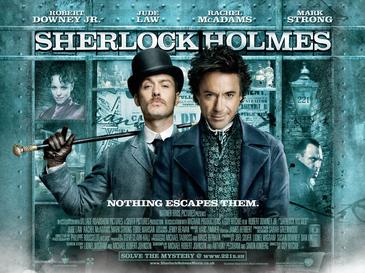
Analysis of Film Opening  Sherlock Holmes (Guy Ritchie, 2010)

I have analysed the opening sequence of Sherlock Holmes. The opening sequence is visually stunning as it combines film footage with VFX to create an authentic Victorian period quality. For example, the titles appear to be hand-written on old paper in sepia ink with watery blotches and ink splatters. Pen and ink line wash is used in combination with longitudinal linotype. Many close-ups of the heroic protagonists merge with live action, again bringing this Victorian period drama up to date. The colours are all muted to suggest the gas-lit streets and murky corners of the Victorian underworld, a place of danger and fear.